a day at the beach

My sister bought me a new camera this year (it’s the third that she’s bought me!) I am very grateful and love playing with it. She also bought me a bunch of fun accessories to use with it, some of which are perfect for the beach.

Here’s my first *edited* video that I put together today. It was a lot of fun to make.

Posted in scout!, tila! | Leave a comment

Spanish Lessons

Today will be the end of two complete months with my Spanish tutor. She has been coming every day for an hour and a half. We have covered a lot of material in these last two months. Today will be our last day for 6 weeks as she has to do community service in another town as part of her undergraduate degree. My hope is that we will resume upon her return.

Here is a summary of what we’ve worked on since beginning April 21st. My goal is to review these things daily so that I will have mastered them before we start up again.

Possessive pronouns
Object pronouns (procliticos and encliticos)Imperatives
Negative imperatives
Verb conjugations: past preterite
Verb conjugations: past imperfecto
Verb conjugations: present (with emphasis on irregular verbs)
Verb conjugations: future simple
Verb conjugations: future conditional
Verb conjugation: past participles/present perfect
Verb conjugation: past participles/past perfect
Verb conjugation: past participles/future pefect
Verb conjugation: past participles/conditional pefect
Verb conjugation: subjunctive/present
Verb conjugation: subjunctive/past
Verb conjugation: subjunctive/present perfect
Verb conjugation: subjunctive/past perfect
Reading practice and translation
Vocabulary (mostly taken from the readings)
Listening comprehension exercises

Verb conjugations have taken up the bulk of my studies. There seems to be an endless set of patterns and rules I have to commit to memory. Here is an example of the 75 conjugations from a regular verb. 79 if you add the 4 forms of the imperative (the negative imperatives take the subjunctive).

infinitve: dudar (to doubt)

present simple:
dudo (I doubt)
dudas
duda
dudamos
dudan
past imperfecto:
dudaba (I was doubting)
dudabas
dudaba
dudabamos
dudaban
past preterite:
dudé (I doubted)
dudaste
dudó
dudamos
dudaron
future simple
dudaré (I will doubt)
dudarás
dudará
dudaremos
dudarán
conditional
dudaría (I would doubt)
dudarías
dudaría
dudaríamos
dudarían
perfecto de indicativo
he dudado (I have doubted)
has dudado
ha dudado
hemos dudado
han dudado
pluscuamperfecto de indicativo
había dudado (I had doubted)
habías dudado
había dudado
habíamos dudado
habían dudado
futuro perfecto
habré dudado (I will have doubted)
habrás dudado
habrá dudado
habremos dudado
habrán dudado
potencial compuesto (conditional)
habría dudado (I would have doubted)
habrías dudado
habría dudado
habríamos dudado
habrían dudado
present subjunctive
dude
dudes
dude
dudemos
duden
imperfecto de subjuntivo
dudara
dudaras
dudara
dudáramos
dudaran
imperfecto de subjuntivo (version 2 – why!!!)
dudase
dudases
dudase
dudásemos
dudasen
perfecto de subjuntivo
haya dudado
hayas dudado
haya dudado
hayamos dudado
hayan dudado
pluscuamperfecto de subjuntivo
hubiera dudado
hubieras dudado
hubiera dudado
hubiéramos dudado
hubieran dudado
pluscuamperfecto de subjuntivo (again, WHY!)
hubiese dudado
hubieses dudado
hubiese dudado
hubiésemos dudado
hubiesen dudado

Being able to remember the above 75 forms is bad enough, but being able to discern the difference in the spoken word of others is extremely difficult. My listening comprehension skills are really bad because of this.

But despite the frustrating difficulty, I’ve already begun to adopt new verb forms as I interact with others. Learning the past, future, and conditional simple tenses have been particularly helpful for me. Now, rather than saying, “I like tacos. I want taco” while ordering food, I can say, “I would like to have a taco” or “would you please bring me another beer”.

The subjunctive is very difficult to grasp. Mostly because we rarely use it in English. The only occurrence I can think of is after a conditional. We say, “If I were a nice guy, I’d buy you a taco”, not “If I was a nice guy, I’d buy you a taco”. Although I often hear people say the latter so I suspect it won’t be long until the subjunctive is completely eradicated from the English language.

In Spanish, the subjunctive is far more intrusive. It appears when communicating desire or emotions. After hypothetical situations. After conditionals. After expressions like, “maybe, I would like…, I hope that…, I need that…, I want that…”, it appears after some verbs like ‘to believe, to think, to opine, to suppose, to remember”, but ONLY when they are used in the negative, such as, “I don’t think that you are a nice person”. Such madness. Who came up with this stuff?

Then of course there is the endless list of irregular verbs! Verbs that follow no apparent predictable pattern. 79 forms to the regular verb and then I have to memorize totally unique forms for a long list of ‘special’ verbs! Insanity.

But apparently people do eventually learn the language. I am hoping to be one of those people. I know that it will take an enormous amount of practice though and I’m certainly living in the right place for that.

Posted in Spanish, studies | Leave a comment

Scout enjoys the 100+ temperatures

Screen Shot 2014-06-17 at 2.04.08 PM

Posted in scout! | Leave a comment

John 11 Study: Tuesday, June 17, 2014

I just finished reading Richard Gaffin’s book, Resurrection and Redemption: A Study in Paul’s Soteriology. It presents all sort of interesting things for future consideration. Much of which relates to my study of John 11 and the resurrection of Lazarus.

Romans 4.17

“as it is written, “I have made you the father of many nations”—in the presence of the God in whom he believed, who gives life to the dead and calls into existence the things that do not exist.”

“…the notion that the believer has been raised with Christ brings into view all that now characterizes him as a result of having been joined to Christ as resurrected. It means that he has been justified, adopted, sanctified, and glorified with Christ, better, that he has been united with the Christ, who is justified, adopted, sanctified, and glorified, and so by virtue of this (existential) union shares these benefits.” (Gaffin, p.129)

Posted in John 11, studies | Leave a comment

Good times on google chat!

google chat!

good times on google chat!

We did a video chat with our friends last Sunday as we prepare for a reunion trip in Albuquerque in a couple weeks. Yun and I are looking forward to a break from the heat. And I am especially thrilled about being able to talk to people! Not something I get to do too much here given my limited use of the language.

Posted in Uncategorized | Leave a comment

John 11 Study: June 10, 2014

start: 9.10am

“After saying these things, he said to them, “Our friend Lazarus has fallen asleep, but I go to awaken him.”” (11.11)

I’ve read that sleep is not an unusual metaphor for death in the ancient world and it certainly seems common enough in the Bible. For instance:

  1. “And many of those who sleep in the dust of the ground will awake, these to everlasting life, but the others to disgrace and everlasting contempt. Dan 12:2
  2. Ps 90:5 Thou hast swept them away like a flood, they fall asleep
  3. Mt 9:24 He began to say, “the girl has not died, but is asleep.” And they began laughing at Him.
  4. Mt 27:52 tombs were opened; and many bodies of the saints who had fallen asleep were raised;
  5. Ac 7:60 “Lord, do not hold this sin against them!” And having said this, Stephen fell asleep.
  6. Ac 13:36 “For David … fell asleep, and was laid among his fathers, and underwent decay
  7. 1 Co 15:6,18,20,51 some have fallen asleep … those who are asleep, we shall not all sleep,
  8. 1 Th 4:13-15 those who are asleep … have fallen asleep in Jesu
  9. 2 Pe 3:4 ever since the fathers fell asleep
  10. “whether we are awake or asleep, we may live together with Him.” 1 Th 5:10

Mark 5:39 and Luke 8:52 are perhaps a bit more confusing.

“The child has not died, but is asleep.”

Here the contrast seems to be between death and sleep, which has led some to believe the official’s daughter wasn’t really dead and that Lazarus was the first to be raised from the dead. But I’m not so sure. Recalling verse 4 of chapter 11, Jesus said:

“But when Jesus heard it he said, “This illness does not lead to death. It is for the glory of God, so that the Son of God may be glorified through it.”

We were never told that the 12-year-old girl of Mark 5 was actually dead. In Mark 5.23 she is described as dying, but not dead. Luke 8 says the same thing. But in regard to Lazarus, we are specifically told he was dead (and for four days) in verses 13, 14, 16, 17, 21, 32, 37, and 39.

Lazarus really died. But Jesus said in verse 3, “This illness does not lead to death” and in verse 25 he says, “Whoever believes in me, though he die, yet shall he live.” and verse 26, “and everyone who lives and believes in me shall never die.“

Lazarus’ illness does not lead to death.
Lazarus has died.
Everyone who lives and believes in Jesus shall never die.
Whoever lives and believes in Jesus will die and yet shall live.

To understand what Jesus is saying here requires an understanding of the following:

1. What am I?
2. What is death?

Am I something more than physical matter? Paul describes the body as a tent in 2 Cor. 5:

“For we know that if the tent that is our earthly home is destroyed, we have a building from God, a house not made with hands, eternal in the heavens.” (5.1)

“So we are always of good courage. We know that while we are at home in the body we are away from the Lord” (5.6)

I don’t believe we cease to exist when our earthly tent is destroyed (ie, dead). We’ve been promised a future resurrected body.

“12 Now if Christ is proclaimed as raised from the dead, how can some of you say that there is no resurrection of the dead? 13 But if there is no resurrection of the dead, then not even Christ has been raised. 14 And if Christ has not been raised, then our preaching is in vain and your faith is in vain. 15 We are even found to be misrepresenting God, because we testified about God that he raised Christ, whom he did not raise if it is true that the dead are not raised. 16 For if the dead are not raised, not even Christ has been raised. 17 And if Christ has not been raised, your faith is futile and you are still in your sins. 18 Then those also who have fallen asleep in Christ have perished. 19 If in Christ we have hope in this life only, we are of all people most to be pitied.” (1Cor 15.12-19)

Sleep is a metaphor for the period of time between the destruction of our earthly tent and the possession of our resurrected or spiritual body (see 1Cor 15.35-49). Lazarus’ earthly tent was dead. It no longer functioned. As such, he was buried. But Lazarus did not cease to exist. Other passages describe that period as sleep. Not an unconscious activity. The parable of the other Lazarus and the rich man demonstrate that point.

Lazarus’ illness does not lead to death.

That is, Lazarus’ illness does not end his existence. It led to sleep. And temporal sleep at that (ie, 4 days).

Lazarus has died.

His earthly tent has been destroyed. It no longer functions and as such, it begins to rot.

What am I?

I am a person. I was created in the image of the Creator. I was given a temporal form, an earthly tent, that will soon cease to exist. By the blood of Christ, I have been promised a future resurrected body. A spiritual body. Imperishable. Immortal.

What is death?

Death is the end of my earthly tent. It denotes my departure from my current body. A period of time where I await the sound of the last trumpet.

It would have been pretty spectacular to have been able to speak with Lazarus subsequent to being raised from the dead. Was he allowed to speak of the experience? We don’t know. The text doesn’t say. What did he see? Where did he go? What was his life like after that experience?

/end 10:21am

Posted in John 11, studies | Leave a comment

Book: Hume’s Problem: Induction and the Justification of Belief

Screen Shot 2014-06-09 at 7.57.38 AM

Matt and I have had conversations lately where Hume has made an appearance and as such, it prompted me to read a more modern (published in 2000) attempt to deal with the devastation Hume dealt to the justification of the inductive process.

Howson is a philosophy professor at the University of Toronto. He is an atheist who has written a critique of theistic teleological and cosmological arguments. His academic interests have been the philosophy of logic and probability philosophy. The former is of particular interest for me, but Howson has no published work on the subject (though he used to be a professor of logic at the London School of Economics).

Here are some interesting quotes from this book:

“Kant saw the necessity imposed as a condition of thinking and of perception. Kant proposed in the Critique of Pure Reason that a so- called transcendental argument can be used to establish that what seem to be very general factual principles, like that which says that every event has a cause, and even more specific ones like the Newtonian laws of mechanics and gravitation, are necessary because they are preconditions of knowledge, the inbuilt framework within which we structure experience.

Answer. The problem with Kant’s theory is the undeniable fact that we can sensibly and consistently conceive alternatives to the principles Kant held to be ‘necessary’ conditions of cognizing—the ‘law’ of cause and effect, Newtonian gravitational theory, and Euclidean geometry as the only possible geometry for space—all of which, moreover, are now deemed false! In other words, the Kantian ‘transcendental deduction’ is unsound. Furthermore, even if there were ever a sound deduction, it would have to employ some non- tautological premisses, and we should then need to enquire how they were established (at this point Hume enters again). Either that or there is an infinite regress of justification, and nothing is achieved.”

I agree with Howson’s critique of Kant’s transcendental reasoning (ie, for the preconditions of human intelligibility). The Kantian TA is unsound, but that doesn’t entail that TAs themselves, as a method to ground beliefs, are unsound.

Further, Howson states they would need to employ some non-tautological premises (ie, non-circular), but doesn’t substantiate why that must be the case (he simply appeals to Hume’s devastation of induction). TAs are not the same as a traditional, linear deductive argument. If they were, then they would in fact result in the problem of infinite regress.

He seems to recognize the soundness of ‘rule-based circularity’ (an appeal to the work of the later reliabilists) when he says:

“Hence there are inductive arguments which, though rule-circular, are not viciously circular: they can give you a justified belief in their conclusions without requiring justified belief in their own soundness.”

Since circularity is an inevitable consequence of any form of reasoning, it’s a helpful admission that Howson presents at the beginning of the book.

Posted in books, studies | Leave a comment

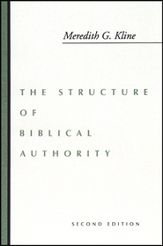
Book: The Structure of Biblical Authority

910698

I finished this book a number of weeks ago. I really thought it was well written and presented some stellar insights. I’ve never read anyone like Kline with the level of sophistication he brings on the topic of covenant. I’m not sure there is anyone better really. I keep the book on my desk to review my highlights from time-to-time. Many good things to think about.

On coventantal parallelism and administrations:

“The scene of the Sermon on the Mount, which epitomizes Jesus’ authoritative teaching role, recalls on mistakenly the figure of Moses at Mount Sinai.” (192)

“Even when stating the contrast between Moses and Jesus Christ in terms of law over against grace and truth, John draws attention to their common mediatorial role. It was “through” Moses and “through” Christ that the Old and New Covenant came.” (190)

Posted in Uncategorized | Leave a comment

Book: Covenant Theology: A Baptist Distinctive

index

Reformed Baptists are such a refreshing change from the madness of the dispensational branch that has grown out of control in the last 100-150 years. Mexico has very few reformed Baptists, but that seems to be changing.

Our church would probably most closely identify with that of a Reformed Baptist. It’s not ideal, particularly due to the dangers of the polity, but it’s what we have.

I’ve been trying to understand the differences between the Presbyterian (with which I would identify) and Baptist covenantalism. They are, historically, similar in many ways. And as such, the early Baptist confessions are nearly identical to the Westminster Standards.

Even so, I’m trying to find the better arguments for baptistic covenantalism. So far this book has not been very impressive in that its intended audience is someone that has very little familiarity with the subject. Nonetheless, here’s a helpful start at identifying the difference in the two forms of covenantalism:

“Just before God promised his ancient prophet a New Covenant, he made a declaration of a change in administration of the covenant of grace. The change has to do with God’s matter of dealing with children. Notice exactly the wording of this proverb, one that was common in ancient Israel: “The fathers have eaten sour grapes and the children’s teeth are set on edge.” In the past, this passage tells us, God dealt with children according to the status and actions of their fathers. If a father was a member of the Covenant, so were the children. If the father was obedient or transgressed, the children also were blessed or suffered punishment accordingly. Jeremiah 31:29-30 teachers that such would not be a matter of dealing with people in the New Covenant. As the Prophet States in verse 30, “But each one shall die for his own iniquity; every man who eats the sour grapes, his teeth should be set on edge.” This instructs unmistakeably that in the New Covenant each person will be dealt with individually, whether his father is a believer or not, or whether his father has sinned or not. The standing of the father before God will have utterly no bearing on the place of the child and covenant dealings. The implications of this are far-reaching: a child would not automatically be included in the Covenant by birth or baptism, or simply because his father is a covenant member. By the same token, if a child is a member of a visible Church in New Covenant days in his father’s excommunicated, the child is not cast out along with the father.” (pp50-51)

Posted in books, studies | Leave a comment

So unnatural…so good.

Screen Shot 2014-06-03 at 7.59.51 AM

We hit 117 yesterday. That’s pretty hot. So last night we decided to go out for a snack. What came to my mind as a tasty snack on a hot day is not what is pictured above. But to demonstrate my courage, I ordered it anyway. I have no idea what it’s called. But it was actually quite spectacular.

The contents include coconut, jicama, green olives, cucumbers, and peanuts. All of which is saturated in clamato juice with spicy tamarindo powder around the edge of the cup. I could go for another one of these tonight.

Posted in Uncategorized | Leave a comment