Union with Christ by Robert Letham

letham

I started Letham’s Union with Christ yesterday in hopes to be able to participate in Matt’s book group in Tucson via video stream this evening. So far I have been nothing but impressed with everything I’ve read of Letham’s. This book has been no exception.

According to Paul in Romans 5:12–21, just as Adam plunged the whole race into sin and death because of their relationship of solidarity with him, so the second Adam brings life and righteousness to all who sustain a relationship of solidarity with him.

If all have sinned because of their relationship to Adam, then why aren’t all redeemed by Christ? This is the claim of the Universalists. But all men are related to Adam by birth, not all men are related to Christ by birth. The Universalist wrongly believes that all humans have that same union as with Adam.

Our justification is therefore grounded on union with Christ.

Faith is what unites us to Christ. It is what bring us into relation with him as we were once in biological relation to Adam. It is by our union with Christ that his righteousness is identified as our own. Therefore, as Letham says, we are justified because we are united with Christ.

Union with Christ rests on the basis of the creation of man to be compatible with God. This is at the heart of the message of the first chapter of Genesis, which highlights the creation of man as male and female, and his rule over the created order. So as to see how this relates to our great theme, we will look first at the overall context of the chapter. In summary, it points to God the Creator as a relational being, with man made in his image reflecting this characteristic in himself.

Our union with Christ reveals something about us and something about God. It reveals that our identity, our person, is to be found in Christ. Because we were created in the image of God. And God is relational. The trinitarian God is inherently and eternally relational. This illuminates what being created in the image of God really means and is such a sharp contrast to some of the rather shallow alternatives to what being created in the image of God means that have been proposed throughout the millennia.

Rowland Stedman wrote that the way in which Christ and his people are united is that “the Lord Christ, by his Spirit, taketh possession of them, and dwelleth in them; and Believers through faith of the operation of the Spirit, take hold of Christ, and get into him; and so they are knit together and become one.” The Lord Jesus “cometh and taketh up residence in them; and they are inabled to go forth unto Christ, and receive him as he is offered in the Gospel; whereby they are in him: and thus this Union is established.”123 According to Stedman, there are “two great bonds or ligaments” of this union. On Christ’s part, he dwells in believers by his Spirit. On their part, they apprehend Christ by faith and “take him home, as it were, unto themselves.”124 The first is what Stedman calls a natural bond, while the second he terms a legal bond. The natural bond is the same as the positive element of regeneration. It is total, Christ taking possession of the whole person. It is beyond human power to effect this, although we are required to attend the means of grace for it to happen.125 By this “our natures are fashioned according to his nature,” since there is “a suitableness” between Christ’s human nature and that of a person being sanctified.126 We will explore the ramifications of this in the next two chapters. In legal terms, the union is akin to that of a debtor and a surety, for “the law reckoneth them as one.” The payment made by the surety is accounted as if the debtor had paid it himself because of the oneness that exists between them in the eyes of the law.127 We will discuss this aspect in detail in chapter 4. Stedman further points to what he calls a moral union, of which love is the bond, as in the case of intimate friends. In this sense, “so are the Lord Jesus and his peculiar people knit together.” He dwells in them and they, in turn, hunger and thirst after further enjoyment of him.128 There may be a hint here of the emergence of the dangers of a separation between the imputational and transformative to which Evans points.129

Two bonds in the union with Christ. 1) Natural. This is the same as regeneration. Christ is taking possession of our whole being. It is beyond human power to effect this. The second bond is the legal bond. Where we are bonded to Christ in debt.

It’s this legal bond of union that Keller seemed to emphasize in his sermon on the union of Christ.

Posted in books, studies | Leave a comment

Calafate – comida mala

la foto

We went to Calfate yesterday afternoon for lunch. This is an Argentinean restaurant on the golf course. Spectacular views. I have no idea how they can keep grass green here in this part of the desert. But they’ve done a nice job.

The service was pretty exceptional for Mexico. It wasn’t perfect, but clearly better than most places. The prices are quite high. This is probably the most expensive place to eat in Hermosillo. I didn’t expect that when we picked the place as it certainly doesn’t look like the most expensive place in town to eat. The ambiance is nice, but nothing amazing.

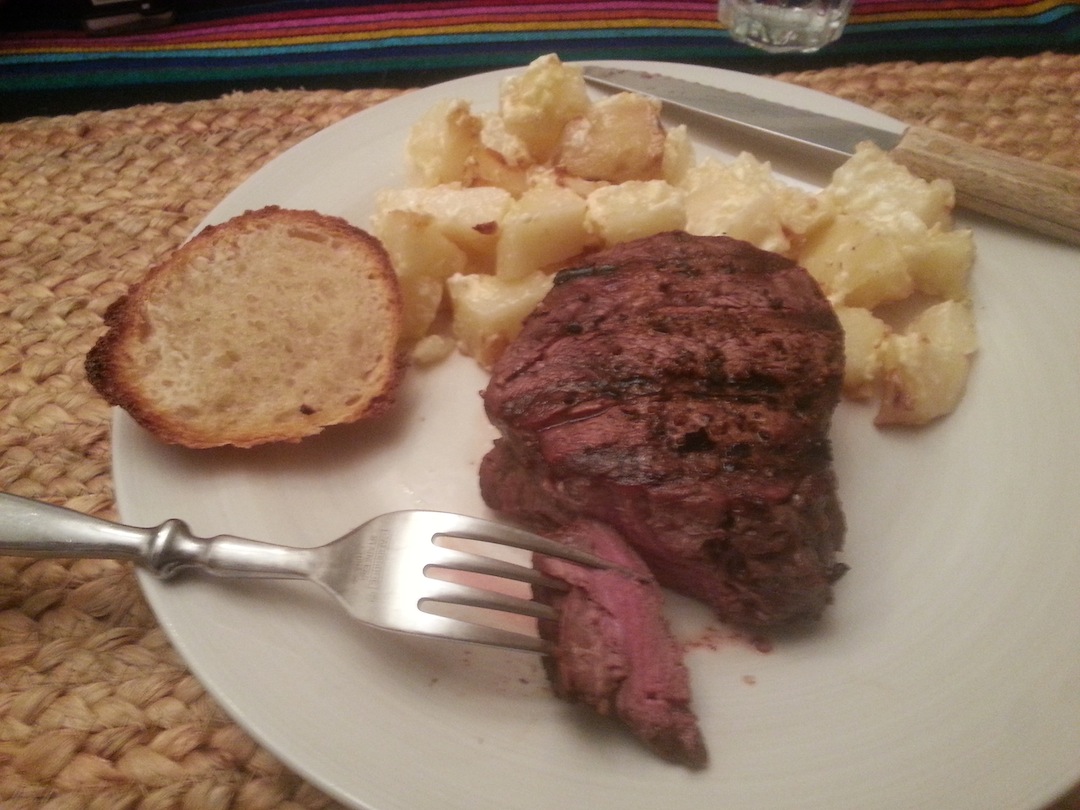
There were a nice variety of dishes. But the food was a major disappointment. I ordered salmon. It was not cooked properly and smelled a little less than fresh. As is custom for the Argentinean places in town (Ché being the other) sides are not included. When dishes are around $30-40 dollars equivalent in pesos, that seems a bit absurd. Even so, my side of potatoes was the best part of the meal.

My dish was not the only disappointment. For this reason, I would not return to this place. So sad. It’s hard to find good restaurants in this town. Good service, good ambiance, but incompetent kitchen seems to be pretty standard. Bonifacios (both here and in San Carlos) are examples of that business model.

Posted in family, food, restaurants | Leave a comment

doctor?

Yun and I went to a “doctor” a couple days ago in Guaymas to try something new for some pain issues she has had. At least I think he is claiming to be a doctor. I don’t think he’s a medical doctor.

It was the strangest of experiences. First, the “doctor” had but a few teeth and did not exactly appear healthy. Maybe the weirdness of it all has distorted my view of things. His office smelled odd. Really odd. That was the ozone therapy we were told. I tried hard to not vomit. It wasn’t easy. Then some prodding with a machine that allegedly measures the electricity in her body. She was then diagnosed with some ailments and prescribed some things to take. After that, he made a bottle of “medicine” in front of us that was then injected through an IV. Yea. An IV. That was not expected.

I took a photo of Yun receiving her “medicine” but blocked her with my hand as she didn’t want to be in the photo.

Such a strange morning.

20140829_110602

Posted in Uncategorized | Leave a comment

Sermons/Lectures: Week 35, August 25-31, 2014

Thursday, August 28, 2014

Samson: The Last Judge, Part I (Judges 13:1-25) / Luke Evans / PC A / 32:30
This is a sermon of Luke’s when he was at Rincon in Tucson. I have enjoyed this sermon many times. So much so, that I added it to our reformedaudio.org web site.

When Gentleness Counts / Denis Haack / PCA / 28:43
I met Denis years ago in Tucson at Rincon. From that time on, I became acquainted with his work and very much enjoyed his writings. He’s very much a modern day Francis Schaeffer and I believe he was in fact trained under Schaeffer. He is one of the best commentators on modern culture that I am aware of.

The Continuing Acts of Jesus Christ: An Introduction (Acts 1.1-5) / Claude McRoberts / PCA / 27:56
Acts was written 62-63ad. The second of a two-volume set (to the Gospel of Luke). Theophilus was possibly a Gentile aristocrat. The name Acts is the short name for the full title; The Acts of the Apostles or the Acts of Jesus Christ.
This sermon is intended to be an introductory to the book, but contains nearly no exposition of the text

Augustine’s Theology, the Pre-Scholastic Period, and Anselm – 01 / Frank James / RTS Orlando / 31:40
This was a decent lecture contrasting Pelagius and Augustine. Augustine believed that Adam would have merited eternal life had he perfectly obeyed in the Garden. Whereas Pelagius, despite the belief in attainable perfection independent from Christ, believed Adam would not have merited eternal life.
As Dr. James’ other lectures, no mention of the source material or references to support the various positions presented. I’ve read a lot of Augustine not to challenge anything presented, but I’ve not read anything of Pelagius’ to know if this lecture was accurate or not in presenting his views.

Theological Turning Points: Biblical Authority, NT Canon, and Trinity – 02 / Frank James / RTS Orlando / 58:01
The Muratorian Canon appears to be in use in Rome, late second century. This canon was discovered in 1740 in Italy. It is believed to be late second century in origin. This list of books closely approximates our current canon. The exceptions are 1 and 2 Peter, Hebrews, and James. It does include additional writings not included in the accepted canon. The Apocalypse of Peter and The Shepherd of Hermas are included in the Muratorian Canon.
Irenaeus maintained the same essential list as the Muratorian Canon. He didn’t include Philemon. Irenaeus seems to lend credibility to the Muratorian Canon. The Shepherd of Hermas is referred to as Scripture by Irenaeus.
Origen (230ad) had a list of writings as well. He accepted the writings of Irenaeus, but also included Hebrews, 2Peter, 2 and 3 John, James, and Jude. He also included other works; such as the Didache, The Epistle of Barnabas, the Gospel According to the Hebrews.
With Athanasius we find the exact same 27 books recognized as canonical as we find in the NT today. Nothing additional. Athanasius lists these in his Easter Letter which is dated 367. There are two confirmations of this list. The Synod of Hippo in 393, and the Synod of Carthage in 397 which affirmed these 27 books. Augustine was present at both of these Synods and agreed with these 27 books. These councils ratified the church’s consensus and practice for the prior two centuries. Their authority does not originate with these councils (any more than the trinity originates with Nicea).

Theological Turning Points: Biblical Authority, NT Canon, and Trinity – 01 / Frank James / RTS Orlando / 39:03
Dr. Frank James is the President of Reformed Theological Seminary in Orlando. Had I ever attended a seminary in the US, this would have been the school of my choice.
I have to say, this lecture was a bit disappointing. For a graduate level lecture, I would have expected something far less basic. Secondly, his theory of canon formation is not very persuasive to me. He paints the formation process as entirely pragmatic.
As an introduction to early church history, it is helpful as a general survey.
Marcion believed only the writings of Paul were authoritative, with some modification. He also seems to have accepted some writings of Luke. He therefore produced his own canon.  Dr. James believes Marcion was the catalyst for the church to produce it’s own canon in opposition to Marcion’s. This seems to reenforce James’ view that the canon was formed purely for pragmatic purposes.
Marcion seems to be revising a list of books already in use in the church. These were a list of books that the early church adopted as authoritative. He is not proposing a list for the first time.
It’s unfortunate that Dr. James does not include any source texts to support his claims regarding Marcion. From prior reading, I know these claims are controversial and disputed.

Posted in lectures, studies | Leave a comment

Spanish Lessons – plan for next week

I spent the morning working on a plan for my Spanish Lessons next week. It actually took me hours to prepare. My first 8 weeks I gave my instructor a general idea of what I wanted to go over and she would prepare lessons. Going forward, I am going to prepare the lessons. This gives me much more control over the content.

Here’s the plan for next week:

Monday
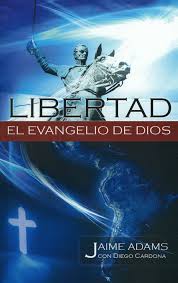
20 Minutes: Reading Libertad: El Evangelio de Dios and extraction of new vocabulary
20 Minutes: Practicing conjugation of present tense er verbs
20 Minutes: Practice forming imperatives and negative commands

Tuesday
20 Minutes: Reading Libertad: El Evangelio de Dios and extraction of new vocabulary
20 Minutes: Practice forming present subjunctives
15 Minutes: Practice using qué versus cuál
5 Minutes: Practice using negation

Wednesday
30 Minutes: Reading Libertad: El Evangelio de Dios and extraction of new vocabulary
30 Minutes: Review vocabulary

Thursday
20 Minutes: Reading Libertad: El Evangelio de Dios and extraction of new vocabulary
15 Minutes: Practice preterite conjugations
15 Minutes: Practice imperfective conjugations

Friday
30 Minutes: Reading Libertad: El Evangelio de Dios and extraction of new vocabulary
30 Minutes: Review vocabulary

Posted in Spanish, studies | Leave a comment

Spanish Lessons

My Spanish tutor has been out-of-town for over two months, but has now returned. Therefore my Spanish instruction may continue! I did not spend much time studying independently. I have a hard time doing that with Spanish. I much prefer to study other things. As such, I feel as though I’ve lost much of what I had previously gained. So we will have to spend much time recovering what we had previously studied.

We had previously spent a considerable amount of time with grammar. Imperatives, negative imperatives, subject/object pronouns, personal pronouns, reflective pronouns, verb conjugations in present, past, future, and conditional tenses, and the subjunctive in various tenses. So many conjugations. It has been hard to remember them all. Especially when listening to people speak at 100mph.

I intend to resume studies on Monday for an hour a day. I’ll probably start by spending most of the time reading. In the past, my instructor has chosen various short stories that center around my reading level. I’ve benefited from those exercises, but I’d prefer to stay with one subject.

I have a small book (125 pages) in Spanish entitled, “Libertad: El Evangelio de Dios” by Jaime Adams. Jaime (or James as he’s called in the US) is a pastor in Phoenix of a Reformed Baptist church. Reading has proven to be a pretty helpful way for me to acquire new vocabulary and to see the grammatical rules I’ve learned in action.

Posted in Spanish, studies | Leave a comment

Vimark

image

We eat out a lot. We get food from Vimark a lot. My favorite is the spicy shrimp pasta. It is so good.

Posted in Uncategorized | Leave a comment

paying the water bill

image

Paying the water bill. No auto payments. No payments online. When we pay our water bill, we wait in a line to pay cash. This is Mexico.

Posted in Uncategorized | Leave a comment

Sermons/Week 34/August 12-24, 2014

We listen to a lot of sermons in our house every day. I thought it might be neat to make a list of what I am listening to throughout the week so I can reference them later.

Saturday, August 23, 2014

The Psalter: Smartphone of the Soul / James Farris / RPCNA / 30:05
This sermon begins with an argument for exclusive psalmody. A good reminder that “Psalms, hymns, and spiritual songs” are all references to the Psalms, much in the same way as, “law, ordinances, and commands” are all references to the law of God.
The psalter is useful to guide every area of life. Luther talks about how the psalter is a little bible. God has given these words which are designed to be set to music so that they can be taken with you.
It is strange to hear a non-expository sermon from a RPCNA church. That is generally criticized within this tradition.

Friday, August 22, 2014

Rahab’s Salvation and Ours / Wade Mann / RPCNA / 29:00
Wade pastors a church in Shawnee Mission, Kansas that I attended a decade ago. It was my last time with the RPCNA. Wade was a good friend and we saw him a few times over the years in Phoenix when he was visiting. He came to mind tonight so I thought I’d find something to listen to from him.
Good message. The story of Rahab is a fascinating one. Wade relates Rahab’s story with our own. She was a Canaanite woman. A prostitute. She had nothing going for her. But she was one of God’s elect.

Othniel: The Template Judge / Nathan Eshelman / RPCNA / 54:54
I have always loved the stories of the judges of Israel. Othniel was the first of them. Why not stay within the RPCNA tradition tonight? Nathan is a teaching elder in a congregation in Los Angeles.
“He was raised up by God, and the Spirit of God was upon him. The prerequisite to Godly leadership. Othniel was prepared by God to be a judge. People today don’t want an Othniel. There’s an obsession with big named pastors. Othniel is a no-name in the history of redemption. We have but a paragraph. We know nothing. It is a template that God has given us. What is important here is that God raised him up and prepared him for the work. And what happens when this no-name becomes judge? Reformation happens. Restoration of the people happens. Revival happens. Repentance happens.”
“Jesus was also a no-name. He didn’t have the credentials that the rabbis wanted. He didn’t have the lineage. He wasn’t rich. To Israel, he was nothing. But God raised Jesus up as he raised up Othniel. And the people are given a deliverer.”
This was a good sermon to listen to.

Posted in sermons, studies | Leave a comment

Gab’s house

Gabriel bought a house a few months back. It’s one of the nicest homes I’ve seen in this city. It has a very modern style that I like. Since he’s bought the home, he’s begun doing upgrades immediately. One such upgrade is to add limestone to the exterior. That’s pretty common here for modern looking homes and it looks spectacular. Here’s a picture of the process. It’s pretty rough, but it will look great in a couple more weeks.

Screen Shot 2014-08-22 at 1.47.30 PM

Posted in family | Leave a comment