A whole lot of red meat…

IMG-20140428-WA0019(1)

We went out for dinner tonight for Beto’s dinner to Steaks del Herradero. This used to be my favorite place in town and we’d eat there pretty much every week. But we haven’t been there much lately as we’ve found nicer (and more affordable!) places. I still love this place, but it relies heavily upon its reputation. The service isn’t quite what it used to be and when a nicer place can prepare the same piece of meat for less money, it becomes less appreciated. Even so, my arrachera marinada was excellent. I think I still prefer it to any other cut.

20140428_212257

IMG-20140428-WA0021

Posted in food | Leave a comment

Matt and Dana leave town with help

Getting to our away from our house can be a little confusing. So we drove Matt part way out of town so they wouldn’t get lost. This is my first video with my new camera. So much fun.

Posted in Uncategorized | Leave a comment

Spades

170px-Aceofspades.svg

Yun and I continue to give Matt and Dana free Spades lessons. We had an opportunity to play last weekend on their visit. Since we hear so much about the Kruis’ rules and how difficult they were (despite being a falsification of true Spades), we agreed to play by those rules.

As everyone expected, Yun and I dominated. In fact, our domination was so much that the game ended half way through.

Documentary evidence:

20140426_170525

Also, I think Matt and Dana may have intended Team Lightning Speed as their team name, rather than Team Lightening Speed as it carries a slightly different connotation. That was my mistake.

Screen Shot 2014-04-28 at 7.31.19 PM

Posted in friends | Leave a comment

Book: The Structure of Biblical Authority

910698

“The Decalogue is not offered fallen man as a genuine soteric option but is presented to him as a guide to citizenship within the Covenant by the Savior Lord, who of his mercy delivers out of the house of bondage into communion in the life of the Covenant, a communion that eventuates in perfect conformity of life to the law of the Covenant.” (p. 127)

Kline’s view here is that the covenant under Moses was not part of the covenant of grace and therefore was not to be seen as a covenant toward salvation. Rather, it is seen as a model for the life of Israel living within the covenant.

Where I would seem to deviate from Kline is in the application of the old covenant law for the new covenant community. I would see the non-ritual (or non-ceremonial) laws as having continuous application today, for the same reason that Kline articulates above. If someone were to disagree with that conclusion, then I would ask upon what basis would they propose any form of jurisprudence or advocate for or against any moral laws not discussed in the new testament.

Posted in books, studies | Leave a comment

Steak tradition continues…

20140426_173320

Matt and Dana came down last weekend to visit from Tucson, which provided opportunity to honor our tradition of steak and potato dinners! This has to be my favorite meal (I know I say that about many things).

20140426_175119

My responsibility is to make the potatoes. I always make them to perfection (despite claims to the contrary). It’s true, I made them a little spicy this time. But spicy is so good!

20140426_181910

Matt’s responsibility is the steaks. He had some challenges at our house. 1] our grill is charcoal, not gas which is what he is used to, and 2] a meat thermometer that wasn’t working. Nonetheless, the meat was spectacular. We went with the ribeye from Taste (tah-stay). Taste is a butcher shop that we frequent which is near our house. I love the place.

20140426_185009

The only problem with this tradition that I struggle with is restraint. Fortunately, after dinner cigars help with digestion!

Posted in food, friends | Leave a comment

John 11 Study

April 28th, 2014

I was listening to RC Sproul’s sermon series on John 11 and he states the following:

“The significance of this is rooted in some beliefs that were common in antiquity among the rabbis. Among the rabbinic teachings was the idea that when a person died, the person’s spirit hovered over the body for three days and that it was possible at any time during that three day period that the body could somehow could be resuscitated if the spirit returned to it. But according to the rabbinic tradition, four days made it absolutely certain that the person had moved beyond all hope of resuscitation and Jesus is aware that his enemies will do anything to negate the impact of the testimony of his miracles. And so he doesn’t rush down to Bethany and raise Lazarus shortly after he expires, so that people could say that all he did was resuscitate him. He lets enough time pass to make it absolutely certain that what Jesus is about to do is completely contra naturam, completely against nature, by raising him from the dead.”


Posted in John 11, studies | Leave a comment

John 11

Monday, April 28th, 2014
1pm

“So, when he heard that Lazarus was ill, he stayed two days longer in the place where he was.” 11.6

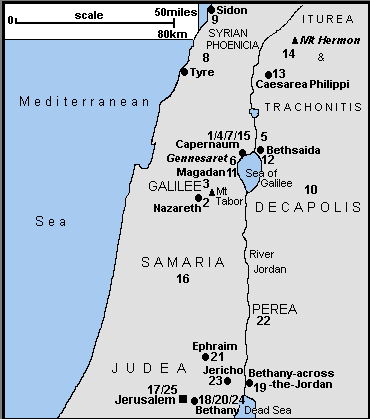
So Jesus receives news from a messenger that his friend, the one whom he loves, is ill, he waits two days longer in the place that he was. That would seem the opposite of what was expected. Jesus had already proven he can heal sick people, and even remotely at that.

I would think this had to be confusing. To the sisters, as well as to the messenger. We aren’t told anything about who carried the message to Jesus. Once they told Jesus that Lazarus was sick, did the messenger just wait around for Jesus to return? Or maybe the messenger returned to the sisters to tell them that Jesus was told the news, but didn’t return right away. Either way that had to be confusing. The messenger and the sisters were quite possibly thinking, “what are you waiting for?!? Do you not understand the severity of the situation?” The narrative that is shared with the reader is that Jesus did know exactly what was going on and what would happen. For this reason, it seems all the more unexpected that Jesus would intentionally wait two more days while his friend suffers with his illness that would lead to his death. And the additional delay would not only ensure Lazarus’ death, but that his body would be rotting and stinking. And Jesus did that intentionally.

So here’s what we’re given and what will happen next:

1. Jesus loves Lazarus.
2. Lazarus gets sick.
3. Jesus is told about the sickness.
4. Jesus is able to heal sick people (even remotely)
5. Jesus intentionally delays visiting Lazarus.
6. Jesus knows that Lazarus will be die.
7. Lazarus dies.

I think if I was in the sisters’ situation, #5 would lead me to question #1. Jesus says he loves them, but doesn’t #5 and #6 seem to contradict that? Maybe some people might begin to wonder if Jesus really is in control of the situation.

Verse 6 seems like such a sharp contrast to verse 5. Verse 5 said that Jesus did in fact love Lazarus. But verse 6 seems to be an action inconsistent with that.

And why two more days?  I’ve read various commentaries on that, but the common denominator is that Jesus wanted Lazarus to be dead before he made his appearance to the sisters.

From jewishencyclopedia.com:
“Death coming after five days’ illness is considered ordinary; after four days, a reprimand of Heaven; after three days, a severe rebuke; after two days, a hastened death; after one day, a sudden one, or, according to some, an apoplectic one (M. K. 28a). To die before reaching the age of fifty is (“to be cut off,” Lev. xviii. 29). Sixty years is a ripe age; seventy is old age; and eighty, advanced age (M. K. 28a).”

From jewishvirtuallibrary:
“In talmudic times, while the burial was not delayed, graves were “watched” for a period of three days to avoid all possibility of pseudo-death (Sem. 8:1).”

I’m having a hard time finding source texts for 1st century Jewish beliefs regarding what happens at death. It seems there is significance attached to three days. A person that is dead after three days is gone, whereas there are chances of ‘pseudo-death’ before that period (perhaps what moderns call the Lazarus Syndrome). Perhaps this is why Jesus waits until the fourth day? That seems to be likely given the description of Lazarus’ state when Jesus arrives (it stinks). Given the delay, there would be no question if Lazarus was really dead or not.

2pm.

Posted in John 11, studies | Leave a comment

Spanish Studies

I have now entered my second week of Spanish studies. The break from the weekend was quite nice though. Today we switched it up. Rather than continue with incliticos and encliticos, my maestra gave me a reading exercise (below) to read which provided opportunity for me to practice what I had learned last week (incliticos, encliticos, verb conjugation of irregular verbs, and other vocabulary). My pronunciation is horrible. I think this is mostly in part due to never actually reading (especially out loud). So it’s good to have started that.

My maestra constructed the story below herself. This is helpful because she can then incorporate all of the things I’ve been learning. My first task today was to read it straight through and then translate it paragraph by paragraph. Then she had me switch from first person (Pedro telling his story) to second person, and then to third person. This in itself took the entire hour. My homework for tonight is to switch the story to the first person plural.

—— —— —— —— —— —— —— —— —— —— —— —— —— ——

Hola, me llamo Pedro y a continuación voy a hablar de mis actividades diarias:

Todos los días me despierto a las 5:55 de la mañana, y me levanto a las 6:00 de la mañana, me cambio de ropa para salir a correr al parque. Todos los días corro 2 kilómetros, me gusta correr porque así me distraigo de mis problemas y correr me hace sentir libre.

Cuando termino de correr, me voy a mi casa y me baño, después me cambio de ropa, empiezo a escuchar música y cocino algo rápido para ir a trabajar, cuando termino de comer, me lavo los dientes y me pongo los zapatos, después tomo las llaves del carro y enciendo el carro, conduzco por 20 minutos y llego al trabajo 10 minutos antes de las 8:00 de la mañana. Cuando estaciono el carro, siempre me encuentro a dos compañeros del trabajo, siempre me dicen que soy muy puntual, ellos saben que me molesta que la impuntualidad. Siempre les digo a mis amigos que llegar temprano es una cualidad que no todos tienen.

En el trabajo, siempre me voy directo a mi oficina y me siento en una silla muy cómoda. Enciendo la computadora y reviso el correo electrónico para ver si tengo algún mensaje nuevo, o si alguien en ese momento me manda uno. Si tengo algún mensaje nuevo, siempre lo respondo. Durante el día mi secretaria viene a mi oficina y me pregunta si tengo algo pendiente, cuando tengo muchas cosas que hacer, siempre le digo que me ayude para terminar las cosas más rápido.

A las 2:00 de la tarde, salgo de la oficina y algunos días mis compañeros y yo nos vamos a algún restaurante cerca para comer, normalmente los viernes es cuando salimos. Los otros días, me voy a mi casa y allí cocino, después de comer veo televisión, me gusta ver documentales y películas. Cuando termino de ver televisión, me pongo a leer algún libro interesante, me gustan las biografías de líderes mundiales, tales como Gandhi o Mandela.

En las tardes, cuando tengo tiempo, me gusta ir a jugar fútbol con mis ex compañeros de la universidad, cada vez que los veo, siempre recuerdo mis años de estudiante universitario. Otros días cuando no practico algún deporte, salgo a caminar al parque o a cualquier otro lugar tranquilo. Me gusta la naturaleza, en esta ciudad llueve mucho, y me gusta cuando llueve, porque me pongo a escribir poemas, no soy muy bueno escribiendo poemas, pero la lluvia siempre me inspira. En las noches, me acuesto afuera de mi casa y cuento las estrellas, conozco todas las constelaciones, es impresionante como el universo puede ser tan grande; siempre sueño con poder viajar a la luna.

A las 8:00 de la noche, vuelvo a cocinar algo ligero para ir a dormir. Después que ceno, me lavo los dientes, y me acuesto, después de 30 minutos aproximadamente me duermo. Siempre satisfecho con lo que hago en mis días de trabajo. Usualmente siempre sueño con árboles muy grandes, tal vez eso es una señal de que tengo que comprar una casa cerca de algún bosque. Después de dormir, vuelvo a hacer lo mismo en las mañanas: ir a trabajar, algunos días salgo con mis amigos, o juego deporte. Siempre trato de mantenerme activo y conocer cosas nuevas.

Posted in Spanish, studies | Leave a comment

Spanish Studies

Here is my homework for today:

Hello Ryan, here are some exercises from everything we saw today, it looks like it’s too much,  it isn’t, there are some notes, formulas, and examples in each structure. Tomorrow we’ll talk a little bit more about proclíticos and enclíticos, and if we have time we will go over some other new stuff.
_______________________________________________________________________________________________


Posesivos

yo: mí/mío(a)/míos(as)
: tu/tuyo(a)/tuyos(as)
usted: su/suyo(a)/suyos(as)
el: su/suyo(a)/suyos(as)
ella: su/suyo(a)/suyos(as)
nosotros: nuestro(a)/ nuestros(as)
ustedes: su/suyo(a)/suyos(as)
ellos: su/suyo(a)/suyos(as)


this is the formula to make sentences with possession:

                                    pos.+N/  Art.+N+Ser+Pos.
pos.= posesivo
N=nombre /sustantivo
art.= articulo (el, la,los, las)
Ejemplo: yo/libro: ______(pos.) _______(N) / ____(art.) ________(N) ________(ser)________(pos)
Respuesta:                 MÍ                 LIBRO        /  EL                    LIBRO               ES                    MÍO            
 
vocabulario: sombrero (hat), pan (bread), almohada (pillow), pelota (ball), lentes (glasses/ sunglasses), 
relojes (watches/clocks)
 
  • write both ways to say the sentences:
 
yo/ojos
tú/casa
usted/gato
el/pan
ella/bolsas
nosotros/casas
ustedes/sombrero
ellos/bicicletas
yo/almohada
tú/pelota
usted/celulares
el/amigas
ella/lentes
nosotros/niña
ustedes/carros
ellos/madre
tú/perros
nosotros/zapatos
ellos/relojes
 
__________________________________________________________________________________
Proclíticos
yo: me
tú: te
usted: se /lo /la /le
el: se /lo /le 
ella: se / la /le
nosotros: nos
ustedes: se
ellos: se
 
formula to make sentences:
               Pron.+P.P.+V.pres.
Pron.=pronombre
P.P.=pronombre proclítico
V.pres.= verbo en presente
 
NOTE: if the sentence has two pronouns, the P.P is going to be from the person that receives the action
 
ejemplo: yo/hablar/ a ti            -a ti referring to the second person in singular (tú) so the P.P is “te”
respuesta: yo te hablo              – the verb is conjugated with the person that does the action
 if it doesn’t have another pronoun, then the P.P you use is the one that belongs to the only pronoun used in the sentence
 
ejemplo: yo/bañar
respuesta: yo me baño
 the pronouns are not necessary once the sentence is made, for example,
instead of: yo te hablo, you can say: te hablo;
instead of: yo me baño, you can say: me baño.
 
yo/conocer/ a ti
tú/ir/al cine
Juan/despertar/temprano
Maria/dormir/tarde
tú y Pedro/aprender/el poema
Miguel/perder/en el cine
yo/perder/ en el parque
Paulina/ distraer/ en la escuela
nosotros/ mover/ de ciudad
 
________________________________________________________________________________________
Enclíticos
yo: me                 
tú: te                    
usted: se             
el: se               
ella: se
nosotros: nos
ustedes: se 
ellos: se 
 
formula to make sentences:
    V+ P.E.+ N         /   V+ P.E.+ lo, la, los, las(depending on the object if it’s feminine or masculine, and singular or plural)
 
 
ejemplo: tú/ lavar/ las manos
respuesta: lávate las manos            or        lavatelas
 
NOTE: if the sentence has two pronouns, the P.P is going to be from the person that receives the action
 
  • write both ways to say the sentences:
Tú/comprar/ el carro
tú/dar/ el libro/ a mí
tú/ vender/ las galletas/ a nosotros
Posted in Spanish, studies, Uncategorized | Leave a comment

Spanish Studies

My homework from yesterday. This lesson was extremely difficult for me, mostly because it’s hard to wrap my mind around the necessity of pronombres procliticos and when they are necessary (since not all verbs require them). English doesn’t seem to have these (as far as I can tell), but Polish does (I think these are the self-reflexive pronouns in Polish).

Yun and I went through these this morning and I was mostly frustrated. I think I am starting to get it, but it’s a slow process.

Possesive nouns
First person singlular, mi, mio, mia, mis (my, your, his/hers, our, their)
Second, tu, tus, tuya, tuyo
Your and yours
Mi carro
El carro es mio.
My versus mine.
Su, sus, suya, suyo,
Nuestro, nuestros, nuestra (our and ours is the same, it doesnt change)
Nuestra iglesia, nuestras casas,
Second person singular, and plural, and third person plural is all the same.

Pronombres procliticos
Yo=me
Tu=te
Usted,el, ella/se
Nosotros/nos
Ustedes/se

Pro perso + pro pro + verb present

Yo me aprendo
Yo me aprendo tu nombre (I’m learning your name)
Yo aprendo tu nombre (I learn your name)
Tu te vas – you go from a place
Tu vas – you go somewhere

Tu te vas a el mercado – you go from the market (means the exact same as tu vas a el mercado)
Yun’s notes: “Tu vas a el mercado” sounds more like an order, or could sound more like a command. Using ‘te’ softens it a bit so it doesn’t sound like a command.
Tu te vas del mercado – you go from the market
Tu vas a el mercado – you go to the market

El se va a la escuela – he goes to the school (from home)
El va a la escuela – he goes to school
Yun’s notes: “El va a la escuela” sounds more like a command where “el se va a la escuela” is more descriptive.
El se va de a la escuela

Nosotros nos…
Reir
Yo me rio con mis amigos.
Yun’s notes: “Yo rio mis amigos” wouldn’t make sense.

Yo escribo una carta – i write a letter
You dont say – yo me escribo una carta
yo me escribo – i write letter to myself

Comprar
Use if its for yourself, versus for someone else

Perder, to get lost, or to lose
Yo me pierdo en el parque

Me perdi (past tense) en china – I got lost in china
Yo pierdo mis zapatos

You dont need to say yo, tu, nosotros, unless you’re intending to be emphatic

Caer – to fall
Yo me caigo – i fell

Pronombres encliticos
It can be one or two, but if two always together

There are 9
Me, te, se, le, nos, la, lo, las, los
(it)
Comprar
Compra te un carro – you buy the car for you
compra un carro (buy a car, someone, but not specifically you, adding te specifies who the imperative is directed toward)
Dar – to give
Dame una galleta – give me a cracker (to me)
Da una galleta – give a cracker (to non-specified)
Compratelo – buy it for you
Damela – give it to me
Escribala – write it (formal)
Escribela – write it (not formal)
Escribamela – write it (down for) me (formal)
Escribale una carta – you (formal) write a letter to her
Escribele una carta – you write a letter to her
escribasela – You (formal) write it (the letter) to her
escribetela – you write it (the letter) to her
escribe une carta a ella and escribele una carta a ella
it’s more common to say escribale than just escribe
Cambiar – to change
Cambiale el celular
Cambiaselo (same as above)
The -le tells me who they are changing the phone with
Limpia le la carra – clean her/his face
Limpiale los zapatos
Limpiaselos

Lava tus zapatos ….shoes are not part of your body, you would never say lavate los zapatos
So you would say lavate tus manos, because it’s part of your body
But when it refers to a third person, you would say lavale sus zapatos, and you would do the same with the first person plural so it would be lavanos los zapatos. So the rule is that you just dont do it for the second person singular.

She will send me homework tonight or tomorrow….

Posted in Spanish, studies | Leave a comment